

Three Hundred Cranes
September in the Tetons means going over the pass.
The east side is the national park — tourists, bison, the standard itinerary. The west side is Idaho: gravel roads, potato fields, a view corridor that looks back at the range from an angle most people never bother with. We knew Sandhills staged on that side. The park gets the famous shots. The Idaho side gets the cranes.
We spent most of the day getting nothing.
Gravel road to gravel road, adjusting position to keep the Tetons in frame, watching the fields. Scattered showers rolled through all morning. By late afternoon the sky had that particular quality you get when rain and sun are happening in the same air — dark in one direction, lit gold from somewhere else. We were dry. The cranes were not cooperating.
We spotted one, way out in a field. Pulled over, set up, started shooting the single bird. A few minutes later a few more came over us, low. We tracked them with the lens.
Then we heard it.
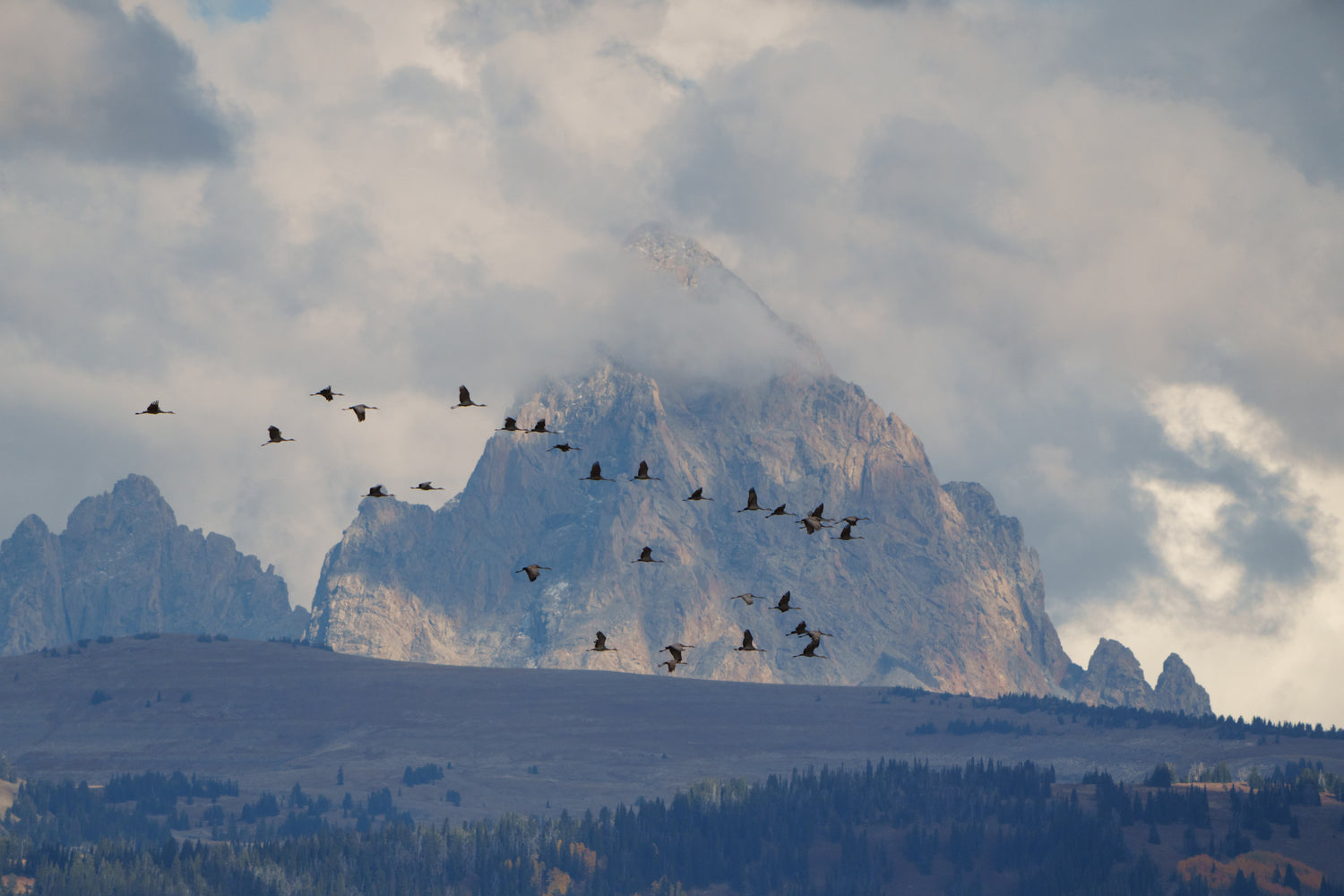
There's no other word for it — a racket. The kind of sound that hits before you know what's making it. We looked up and there were three, maybe four hundred birds, all up at once, turning over the field. The sun had just punched through between showers. There was a rainbow to the east. The whole flock banked and came across in front of the range — Sandhills against the Tetons, in that window of light, for about forty seconds.

Greater Sandhill Cranes have been migrating this route for longer than the Tetons have looked like this. The Rocky Mountain population — roughly 20,000 birds — funnels through the Snake River Plain every September on its way to wintering grounds in New Mexico. The fossil record for Sandhill Cranes goes back 10 million years, the oldest confirmed lineage of any bird alive today. They were doing this before the mountains were this tall.
Two designs came out of that afternoon. The single bird — the one we'd been watching before everything changed — and the flock against the range. Same day. Forty seconds apart.
From the Archive — In This Piece

